Instructional Systems Design

Developing effective training that gets results involves more than simply entering content into PowerPoint. Our expert instructional designers apply the ADDIE model in a dynamic, iterative, and flexible manner (similar to SAM) to produce custom, creative learning solutions to your training problems using a variety of methods.
- Analysis: Our process begins with identifying what needs to be done and why it's not being done now. Learn more about our analysis processes.
- Design: Once we identify the problem, we design the solution, beginning with the end in mind: the goals to be achieved.
- Development: This phase includes development of prototypes/wireframes, draft, and final products.
- Implementation: This phase involves rolling out the solution with end users.
- Evaluation: Evaluation occurs continuously throughout the entire process, with adjustments as needed all along the way.
PHMSA TQ Instructional Design and Curriculum Development Support
The Pipeline and Hazardous Materials Safety Administration's Training and Qualifications Center (TQ) prepares the nation's pipeline inspectors to conduct pipeline safety inspections. From its establishment until 2016, TQ's training curriculum had been developed by subject matter experts, without going through a systematic instructional design process.
LEAD was contracted to provide instructional design and development support to guide TQ through the process of analyzing the organization's training needs, revising and expanding its curriculum, and standardizing and documenting its processes. With our assistance, TQ achieved accreditation from the International Association for Continuing Education and Training (IACET) and is now able to offer Continuing Education Units (CEUs) for their courses.
Custom eLearning

Your organization's learning, education, and development problems are unique. Shouldn't the solution also be unique? We partner with you to create custom eLearning solutions that get results:
- Achievement of learning goals
- Increased learner engagement
- Higher motivation and satisfaction
- Improved employee retention
- Increased return on investment
IAFC Chief 101
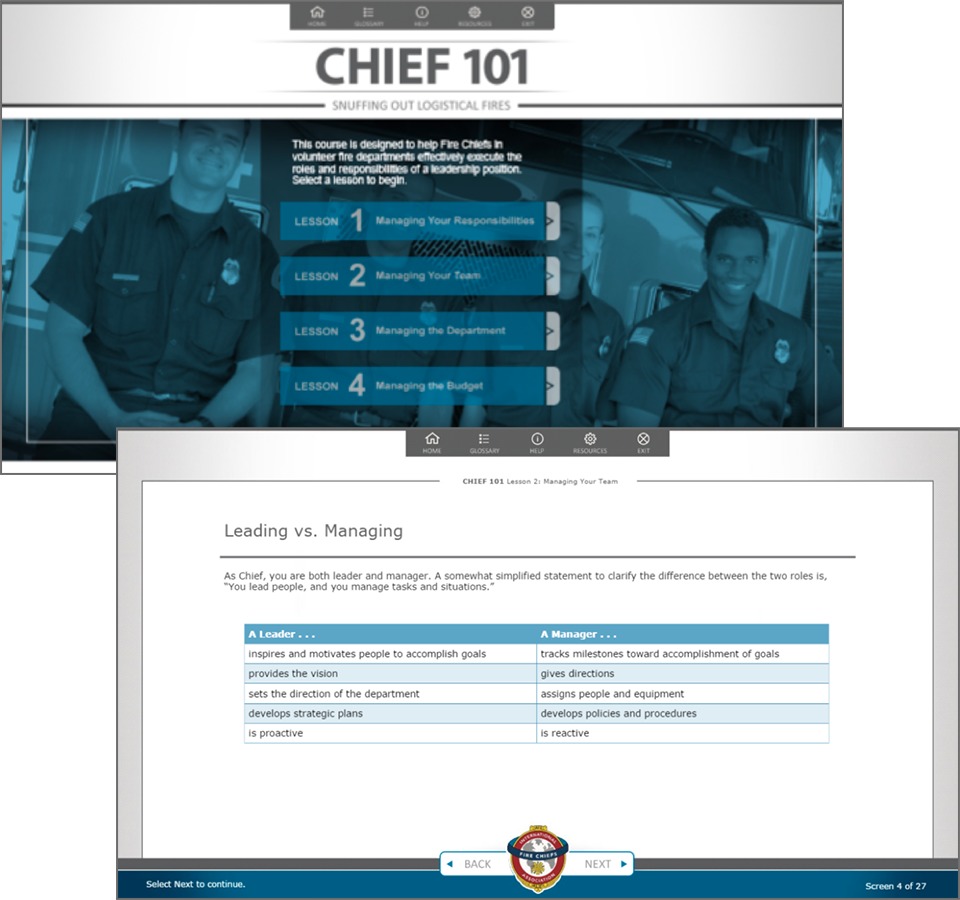
We collaborated with the International Association of Fire Chiefs (IAFC) to develop a two-hour web-based course called Chief 101 to enable Volunteer Fire Chiefs to effectively execute the roles and responsibilities of a leadership position.
The course consists of four lessons:
- Lesson One: Managing Your Responsibilities
- Lesson Two: Managing Your Team
- Lesson Three: Managing the Department
- Lesson Four: Managing the Budget
Each lesson begins and ends with a "bookend" scenario that highlights realistic challenges faced by a Fire Chief and the solutions he implements to resolve the issues. Practical advice and real-life examples are presented through "A Word from the Chief" mentor audio segments to help learners apply the information, and frequent knowledge check questions enhance learner retention and engagement. The course was developed in Articulate Storyline 360.
"I'm about to start my eleventh year as Chief. I took this course to see what I didn't know when I was appointed to serve as my hometown's fire chief after being away from home for a period of time. This is truly a course I wished was available eleven years ago. It hit on all the fundamental core practices we use as Chiefs. I applaud the group of people that developed this, very well done."
--Chief 101 Course Participant
Virtual Instructor-Led Training

Virtual training gives you the power to meet your learners where they are. We have the tools and expertise to design virtual instructor-led training (VILT) solutions or to convert existing instructor-led training to virtual platforms to meet today's challenges and bring your training to your audience no matter where they are.
We design highly interactive, engaging virtual learning experiences that maximize learner participation, reduce training costs, and connect learners with each other and instructors. Our web conferencing technologies and learning management system allow us to incorporate a blend of synchronous and asynchronous learning strategies for the most robust training solution.
PHMSA TQ Evaluation of Operator Qualifications Virtual Instructor-Led Training Course
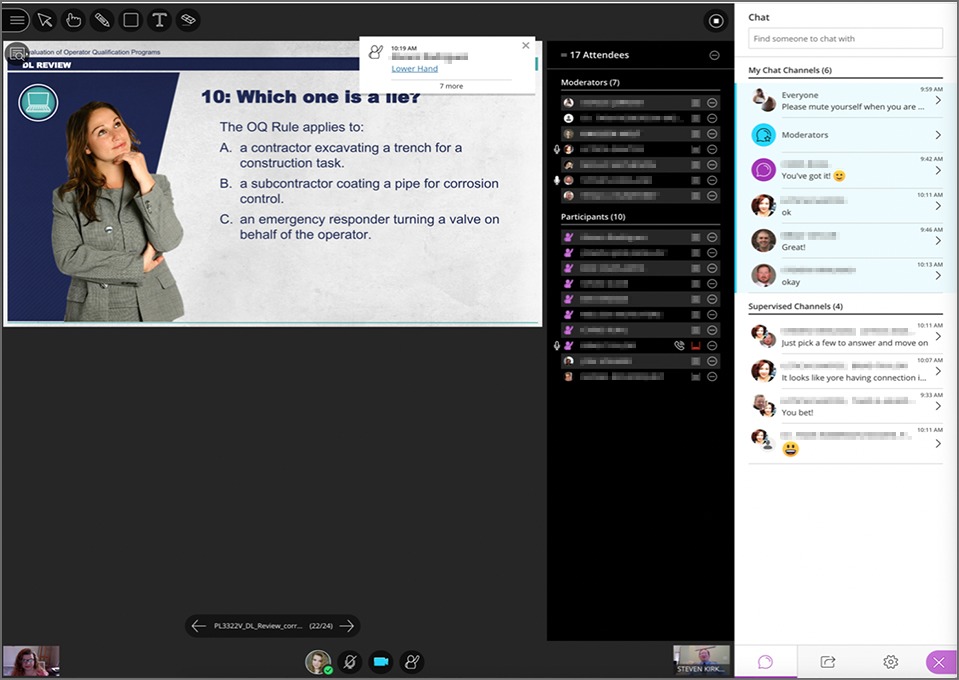
The Pipeline and Hazardous Materials Safety Administration's Training and Qualifications Center (TQ) prepares the nation's pipeline inspectors to conduct pipeline safety inspections. In response to the 2020 pandemic, we helped TQ convert a number of their traditional classroom courses for virtual delivery. Among those courses was the Evaluation of Operator Qualifications (OQ) course.
To design VILT courses to best meets the needs of the target audience, we conducted a survey of TQ's student population and found that learners had two main priorities:
- The flexibility to complete course activities at their own pace
- The ability to complete any synchronous components within one week, so as not to be removed from inspection rotation longer than necessary
The redesigned course uses a "flipped classroom" approach, in which activities traditionally assigned as homework are done together during synchronous sessions and other activities traditionally done during class-such as lecture-are done asynchronously, at the students' own pace. The course incorporates a blend of two distance learning components and a virtual instructor-led course.
- Course 1: Four-lesson asynchronous online course with exam (1 hour, 45 minutes)
- Course 2: Asynchronous activities: brief recorded lectures, quizzes, individual exercises, and discussion posts (6 hours)
- Course 3: Four synchronous sessions of varying lengths and three asynchronous individual exercises, conducted over four days (7.5 hours total synchronous time and 2 hours, 45 minutes asynchronous time)
In the pilot evaluation feedback, 100% of participants agreed with the statement, "My learning experience in this course was excellent," and 89% responded that the quality of interaction was equal to or better than a traditional face-to-face classroom course.
"The end-of-course presentations were the best I've seen from any OQ course. The students really demonstrated that they knew the regulations and could do this kind of inspection. They blew me away."
-Lead Instructor, Evaluation of Operator Qualifications VILT Course
Training Needs Assessment

We perform training needs assessment at the organization level, job level, and individual level. Our approach to analysis begins with the questions, "What needs to be done?" and "Why is it not being done now?" The answers to these questions help us identify the performance problem and determine how to solve it. Training may be part of the solution, but it may not be all of the solution.
Through surveys, focus groups/stakeholder meetings, interviews, observations, and other analysis methods, we identify:
- The target audience for any performance improvement solution to be developed
- Competencies of the job role in question
- The tasks that the members of the target audience need to perform
- What they need to know to be able to perform those tasks
- Gaps in knowledge, skills, and abilities
- Gaps in the current program
- Any other factors that may be contributing to the performance problem
Through comprehensive organizational analysis, job task analysis, and gap analysis, we can determine the precise solution for your organization's performance problems.
PHMSA TQ Surveys and Critical Task Selection Boards
The Pipeline and Hazardous Materials Safety Administration's Training and Qualifications Center (TQ) prepares the nation's pipeline inspectors to conduct pipeline safety inspections. To ensure that TQ's training curriculum was meeting the needs of its target audience, PHMSA contracted with LEAD to conduct a series of surveys and stakeholder meetings known as Critical Task Selection Board (CTSB) meetings.
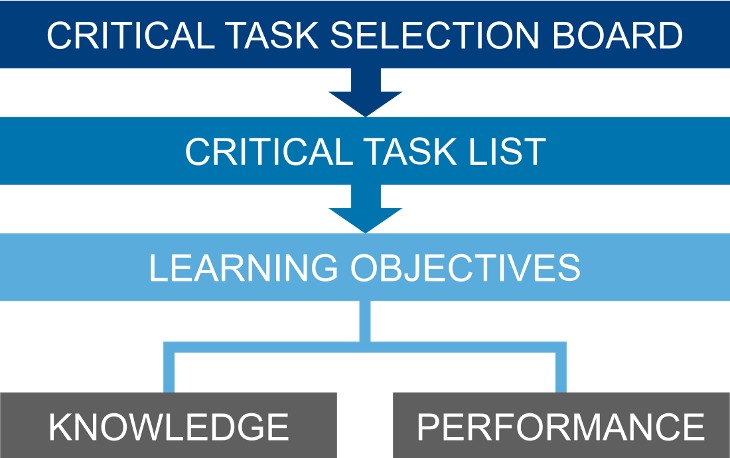
The purpose of the CTSB meetings was to identify the critical knowledge and performance tasks inspectors and investigators must understand and perform on the job. CTSB members were subject matter experts (SMEs) chosen to represent their federal or state regions and industry trade associations.
Prior to a CTSB being conducted, our knowledge management specialist administered a stakeholder survey to collect data from a sampling of stakeholders about the perceived relevance and importance of tasks related to a topic area.
Our expert facilitators then used the survey results to help guide the discussions during the CTSB meeting, including the problem to be solved, target audience demographics, job tasks, and prerequisite knowledge. Each task was analyzed according to its difficulty, importance, and frequency to determine its priority for formal training.
The outcome of the CTSB--the critical task list--provided the foundation for the learning objectives used in course design and development.
Performance-Based Training
Employee training shouldn't be about checking boxes. It should be about performance improvement. Our learning solutions focus on just that.
By ensuring that learning objectives map to job tasks and are taught through real-world scenarios and situations, we help ensure that learners who complete our courses are able to PERFORM.
We design performance-based assessments, measured with rubrics, to ensure that learners can demonstrate achievement of the learning objectives.
IAFC Beyond Hoses and Helmets: Putting the Pieces Together
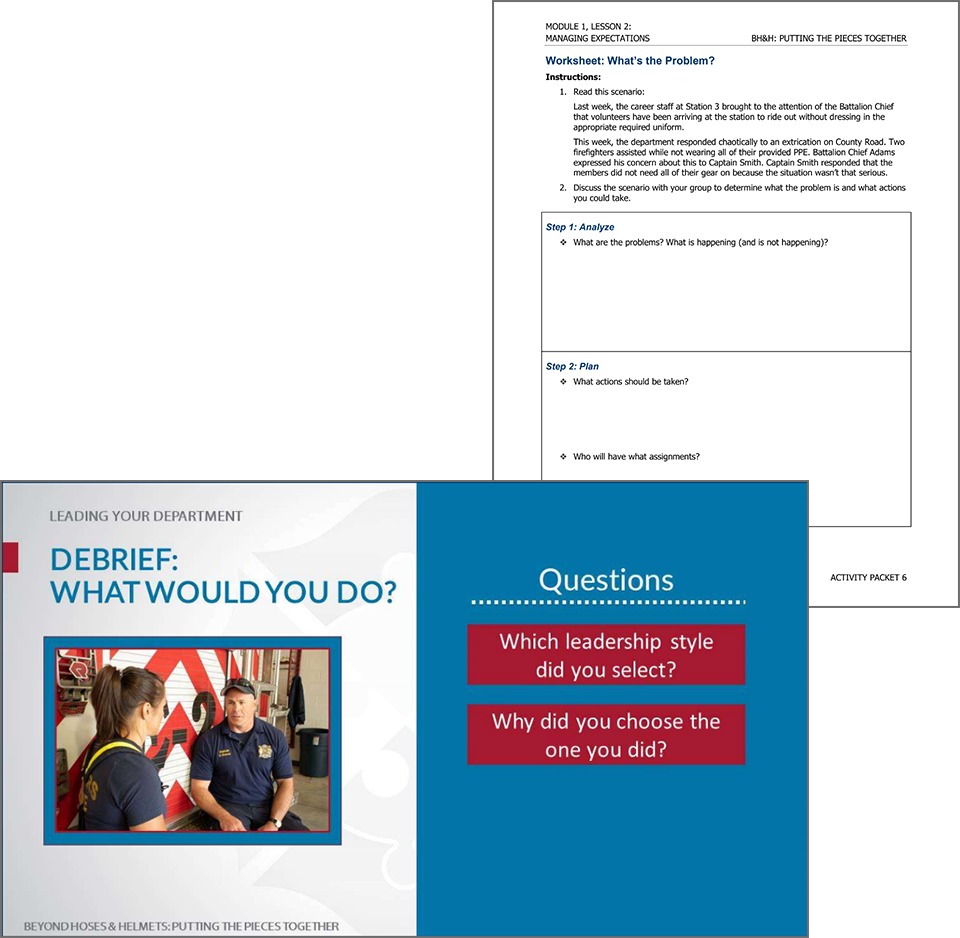
The International Association of Fire Chiefs (IAFC) contracted LEAD to revise a two-day instructor-led course for fire officers in volunteer and combination departments.
Topics include establishing strategic goals, managing departmental issues, building diverse and inclusive departments, recruitment and retention, and conflict resolution.
The course is designed to:
- Improve retention and recruitment efforts
- Strengthen the ability to lead people and the department
- Promote a positive and inclusive culture
The course includes scenario-based activities that challenge the learners to apply leadership skills to various real-world situations.
Blended Learning

Blended learning solutions leverage the advantages of online and in-person training delivery methods.
- eLearning reaches geographically dispersed audiences without the need for travel
- Instructor-led training allows for hands-on practice and greater interpersonal connections
One model of blended learning design involves creating eLearning courses to teach learning objectives that are on the lower levels of Bloom's taxonomy. This enables organizations to get more bang for their buck in instructor-led training courses. Rather than using instructors as the "sage on the stage" delivering lecture, they can be the "guide on the side" facilitating real-world practical exercises.
PHMSA Introduction to Pipeline Safety Inspections Program
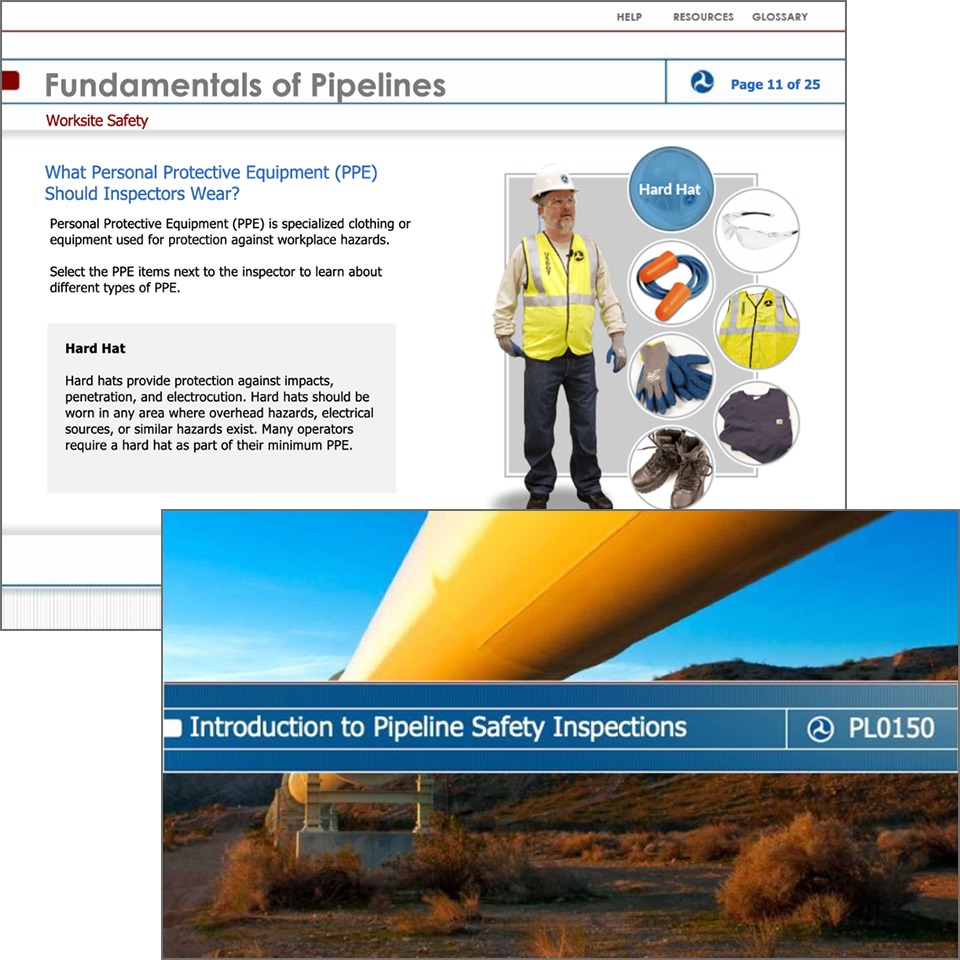
The Pipeline and Hazardous Materials Safety Administration's Training and Qualifications Center (TQ) prepares the nation's pipeline inspectors to conduct pipeline safety inspections. TQ identified the need for an introductory course for new inspectors who are entering the field with no prior experience. To meet the need, we developed a blended solution including two eLearning courses and a 3.5-day instructor-led course:
- Fundamentals of Pipelines (6-lesson eLearning course)
- Introduction to Inspections (5-lesson eLearning course)
- Introduction to Pipeline Safety Inspections (5-lesson instructor-led course)
The use of a blended solution makes the most efficient use of resources and allows new inspectors to gain foundational knowledge right away, without waiting for travel funding to be approved. Then, when they can attend the instructor-led portion, they are able to participate in field inspection tasks at the training facility.
During the pandemic, we assisted with converting the instructor-led portion for virtual delivery, producing video simulations to replace the inspection activities previously conducted in the field. On the end-of-course evaluation, 100% of participants agreed with the statement, "My learning experience in this course was excellent."
"This was my first course with PHMSA and it was an outstanding experience. Keep up the great work!"
-Participant, Introduction to Pipeline Safety Inspections Program
Microlearning

Our learning experts understand that training doesn't have to be full-sized to be effective. We develop bite-sized, mobile-friendly learning solutions that provide just-in-time support right when learners need it.
- Videos
- Podcasts
- Job aids
- Games
- Quizzes
- Scenarios
- eLearning
- Tutorials
- FAQs
PHMSA TQ Shorts - Underground Storage Well Drilling and Completion
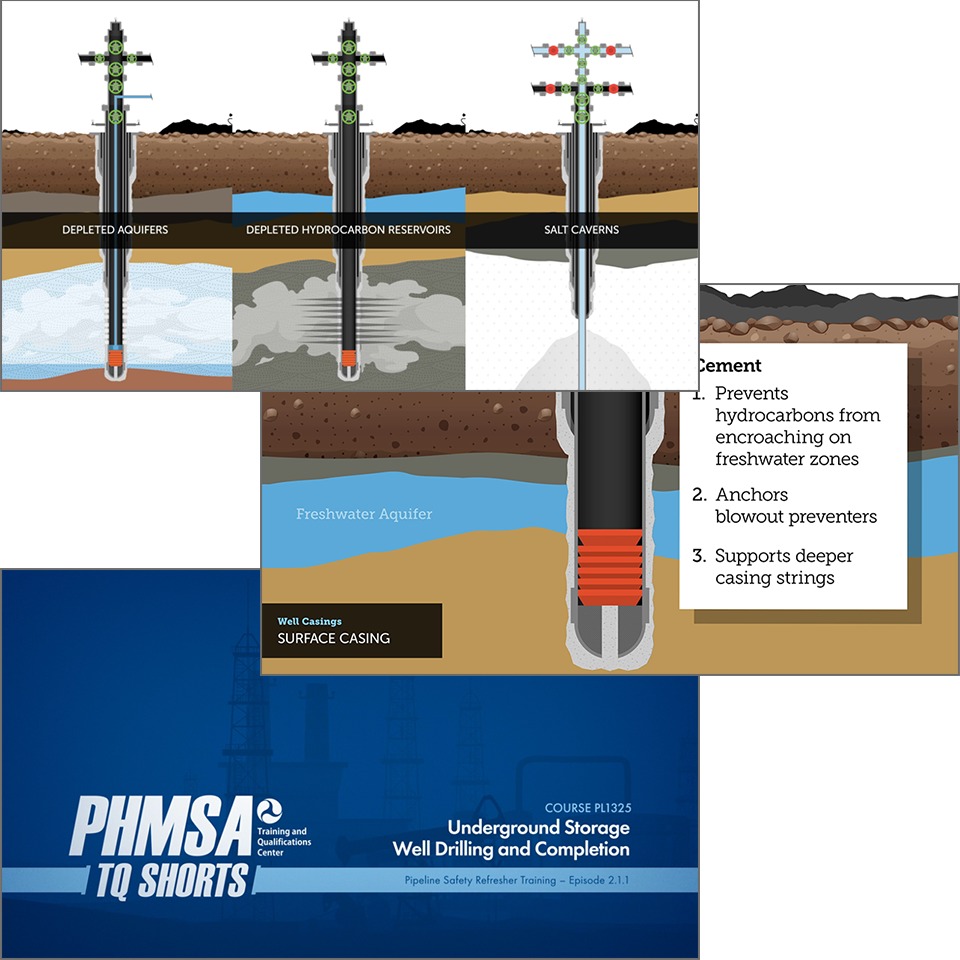
The Pipeline and Hazardous Materials Safety Administration's Training and Qualifications Center (TQ) prepares the nation's pipeline inspectors to conduct pipeline safety inspections. As one method of providing refresher training, LEAD developed "TQ Shorts," which are brief videos to review key concepts.
One example is a video produced to review several concepts identified as high priority tasks from the Safety Evaluation of Underground Natural Gas Storage Programs course.
Custom animations and narration are used to explain and illustrate:
- How a natural gas well is drilled
- Well casings
- Well completion types
- Well configurations
Interactive Scenarios

Stories are one of the most effective tools we have in our instructional design and curriculum development toolbox. They help get and keep the learner's attention, enhance retention and motivation, and help make connections between the content and the learner's prior knowledge and experiences.
Well-crafted scenarios help create context for new information, allowing learners to apply it to their unique needs. We work closely with subject matter experts to develop realistic scenarios that emulate real-world on-the-job situations.
IAFC Diversity and Inclusion Scenarios
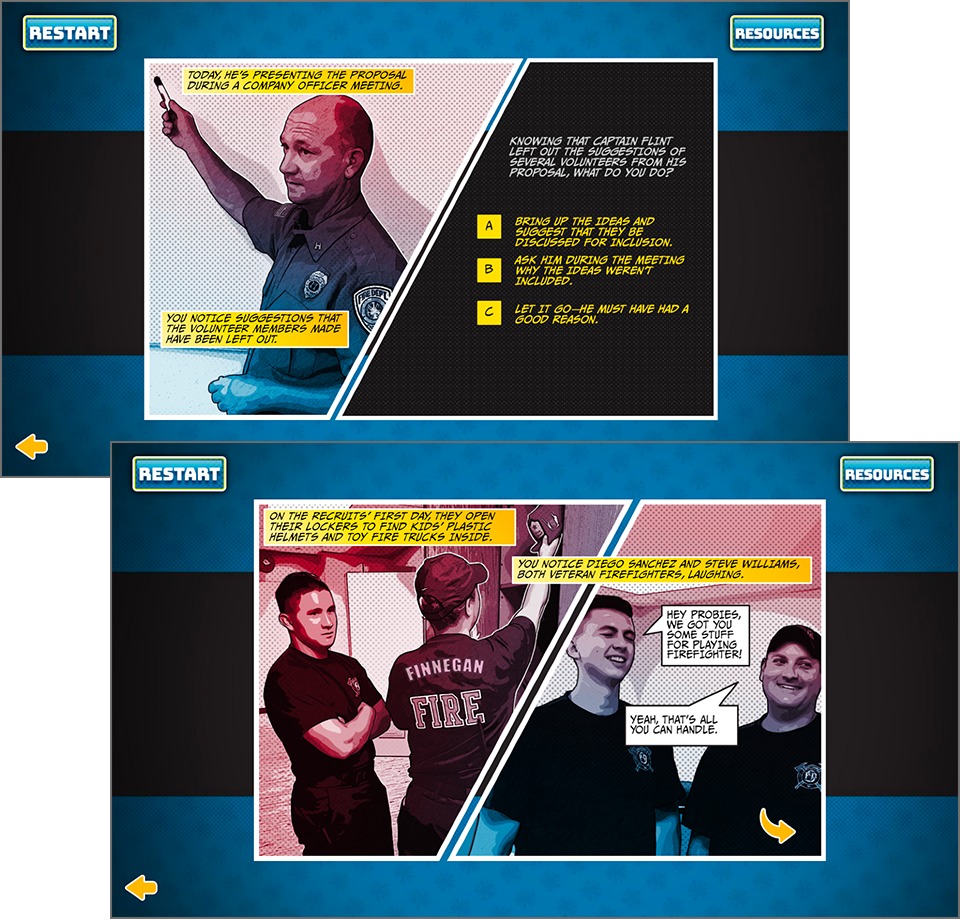
The International Association of Fire Chiefs (IAFC) provides comprehensive education and training for fire and emergency service worldwide. LEAD designed and developed three interactive online branching scenarios to assist department leadership in understanding how to deal with departmental conflicts related to inclusion and diversity.
The course employs a graphic novel theme, a nod to the firefighter's heroic role in the community. To promote the concept of inclusion from the very start, users select a pronoun at the beginning of the scenario, and the voice they hear (male, female, or nonbinary) is based on that choice. The learner also enters a username, which is used throughout the course for a more personalized experience.
Rather than receiving "correct" or "incorrect" feedback after answering questions, learners experience the consequences of their choices, simulating real-life decision-making of department leaders.
Below is a summary of the challenges addressed in each scenario.
| Scenario | Challenges |
| Scenario 1: The New Recruits | Issues related to:
|
| Scenario 2: The Feud | Conflicts between:
|
| Scenario 3: Sign Up | Biases related to:
|
Gamification & Game-Based Learning

Learning doesn't feel like a chore when it's fun. We incorporate gamification and games to enhance learner engagement and motivation.
Gamification involves including game-like elements into learning activities that are not a game. For example, we can award badges and points, and display progress bars and leaderboards.
Games can be useful for reviewing or practicing learned content. They can be incorporated into eLearning, virtual learning, or instructor-led training.
PHMSA TQ Safety Evaluation of Underground Natural Gas Storage Facilities

The Pipeline and Hazardous Materials Safety Administration's Training and Qualifications Center (TQ) prepares the nation's pipeline inspectors to conduct pipeline safety inspections. The Safety Evaluation of Underground Natural Gas Storage Facilities blended learning program provides guidance and practice for the performance of underground natural gas storage inspections.
During the first lesson in the instructor-led portion of the class, groups compete against each other by playing a quiz game that reviews concepts from the distance learning prerequisite course. In keeping with the television show upon which the game is based, the categories have clever names:
- Staying in Formation contains clues related to geological formations used for underground storage facilities.
- Out in the Field contains clues related to components of an underground storage field.
- Well, Well contains clues related to well drilling and completion.
- The "Log" In category includes the word "log" in every clue, indicating a specific type of log used for underground storage facility inspections.
- In the Dictionary contains clues related to terms and definitions associated with underground natural gas storage.
This game encourages immediate participation and aids in retention while enhancing motivation and engagement.
Learning Management System (LMS) Administration

Learning Management Systems (LMS) provide a solution to a variety of organizational tasks related to training. Whether it is administrative, documentation, reporting, or creating a training program, this technology is an important investment. Our educational experts have experience in several LMS products and can provide a range of assistance from purchasing considerations to training existing staff.
Our experts provide:
- Needs analyses for clients considering LMS implementation
- Assistance in the rollout of a new LMS system
- Training for LMS administrative staff
- Development of customized Standard Operating Procedures (SOPs) for LMS Administration
LEAD LMS Administration
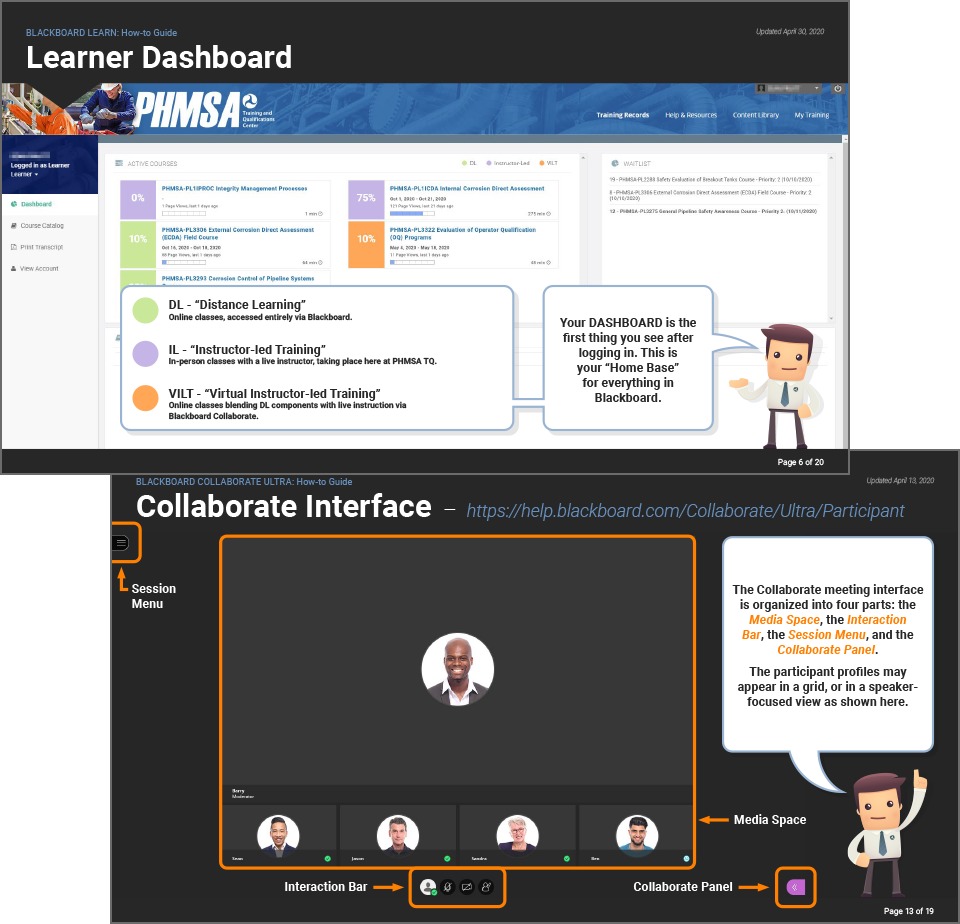
A 501(3)(c) non-profit organization utilized LEAD Training to provide LMS Administration services to manage the enrollments, certifications, and transcripts for over 10,000+ U.S. and international student accounts. Our consultants set up courseware including distance learning courses, instructor-led sessions, webinars, videos, and assessments, conducted quality assurance reviews, and created customized surveys and reporting metrics to share data with stakeholders.
LEAD developed a quality assurance plan and updated legacy courseware to meet today's changing technical requirements, eliminating any potential interruption in services. LEAD's team of LMS experts advised on best practices and recommendations for system usage, and managed the customer support desk to resolve technical issues and provide personalized feedback to a vast array of learners, both within the US and abroad.
PHMSA TQ
The Pipeline and Hazardous Materials Safety Administration's Training and Qualifications Center (TQ) prepares the nation's pipeline inspectors to conduct pipeline safety inspections. When the COVID-19 crisis drove PHMSA TQ to review their training model to keep inspectors up-to-date in securing the nation's pipeline system, our training experts were called upon to assist in the Virtual Instructor-Led Training (VILT) effort. This included ensuring that all materials for this effort were converted for virtual delivery through their Blackboard LMS.
Our education professionals:
- Redeveloped curriculum for flipped-classroom learning
- Converted course materials for virtual delivery
- Trained instructors in virtual delivery through Blackboard Collaborate
- Re-engineered hands-on performance scenarios for virtual format
- Ensured all VILT materials were loaded into the LMS for class delivery
- Created and verified all grade books were accurate
- Created multi-day Blackboard Collaborate classrooms for 18 separate technical courses
- Uploaded and organized materials for each day's class session in Blackboard Collaborate
- Provided live support during course delivery
- Provided live LMS tech support for instructors and students
Section 508 / WCAG 2.0 Expertise

We design accessible learning solutions that meet or exceed Section 508 and WCAG 2.0 standards to ensure usability for individuals with disabilities. Our personnel have more than a decade of experience designing accessible training products for federal government clients. We understand that it's not only websites that need to be accessible to all. Our universal design experts create accessible documents, presentations, and spreadsheets too.